
Estimated reading time: 9 minutes
Key Takeaways
- Pityriasis rosea is a common, self-limiting inflammatory rash that is not contagious and usually clears within six to eight weeks.
- The rash almost always begins with a single herald patch, followed by a spread of smaller oval lesions that form a Christmas tree pattern on the back.
- The most likely cause is reactivation of human herpesvirus 6 and 7, not fungus, allergy or poor hygiene.
- It is frequently mistaken for ringworm, guttate psoriasis or eczema, so a confirmed diagnosis matters before any cream is applied.
- Treatment focuses on comfort and itch control, with phototherapy reserved for severe, widespread or persistent cases.
Table of Contents
- What Is Pityriasis Rosea and How It Behaves
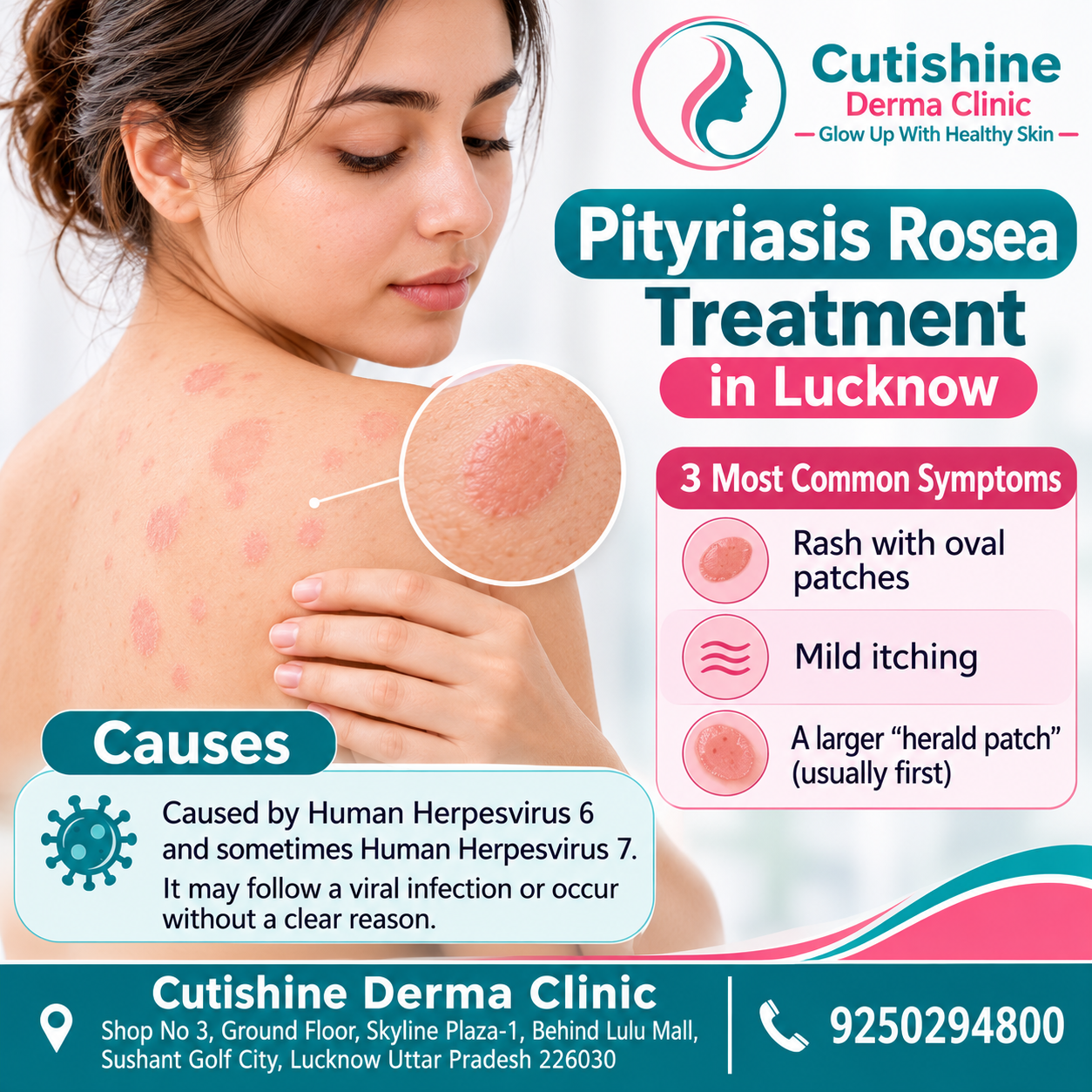
- Pityriasis Rosea Symptoms: The Herald Patch and Christmas Tree Pattern
- Causes, Triggers and Risk Factors Behind Pityriasis Rosea
- Pityriasis Rosea vs Ringworm, Psoriasis and Eczema
- Treatment Options for Pityriasis Rosea at Cutishine Derma Clinic
- Home Care, Recovery and When to See a Dermatologist
- Frequently Asked Questions
Cutishine Derma Clinic, led by Dr. Varsha Dubey, provides precise diagnosis and effective pityriasis rosea treatment in Sushant Golf City, Lucknow, for a skin rash that alarms far more people than it actually harms. A single pink, scaly patch appears on the chest or back one morning, and within days a scattered rash spreads across the trunk and limbs. Most patients arrive at the clinic convinced they have ringworm, psoriasis or something worse.
The anxiety is understandable, and it is also usually unnecessary. Pityriasis rosea is a common inflammatory skin condition that clears on its own in most people within six to eight weeks, and it is not contagious. Even so, the rash can itch, it can look distressing, and it overlaps with several conditions that need different treatment. This guide from the dermatology team at Cutishine Derma Clinic explains what pityriasis rosea is, how to recognise its symptoms, what causes it, and how modern dermatology treats it comfortably and safely.
1. What Is Pityriasis Rosea and How It Behaves
Pityriasis rosea is an acute, self-limiting inflammatory skin condition that typically begins with one distinctive lesion and then spreads in a predictable pattern. It is not an infection you can pass on, not a sign of poor hygiene, and not a food allergy. The name comes from the fine, bran-like scale and the pinkish colour of the lesions, and the condition has been described in dermatology literature for more than two centuries.
The classic course is remarkably consistent:
- A single larger patch, called the herald patch, appears first.
- Within a week to a fortnight, smaller oval lesions erupt along the trunk, upper arms and thighs.
- After roughly four to six weeks the rash begins to fade, and most people are completely clear by eight weeks.
- Some cases linger for three or four months, and a small number of patients experience a repeat episode later in life.
Recurrence is reported in a minority of cases, usually months to years apart.
Teenagers and young adults between 15 and 35 years are most often affected, although pityriasis rosea can appear in children and in older adults. Dermatologists in Lucknow see a steady stream of cases during seasonal transitions, when humidity and temperature shift quickly and the skin barrier is stressed. People with darker skin tones, including many Indian patients, often notice the rash more because of brownish or greyish discolouration that remains after the lesions fade.
The condition also appears more often in people with a family history of pityriasis rosea and in those already living with eczema. None of these factors make the rash dangerous. They simply help a dermatologist build a confident picture, rule out look-alikes, and decide whether treatment is needed or reassurance is enough.
2. Pityriasis Rosea Symptoms: The Herald Patch and Christmas Tree Pattern
The Herald Patch: The Signature Feature
The herald patch is a round or oval plaque, usually two to four centimetres across, with a pink or salmon base and a delicate scale near the margins that lifts inward like the edge of a collar. It often appears on the chest, abdomen, back or upper arm. Because it resembles a patch of ringworm, it is frequently misdiagnosed and treated with antifungal creams for weeks with no improvement whatsoever.
The Secondary Eruption and Collarette Scale
The secondary eruption follows within a week or two. Smaller lesions, generally five to fifteen millimetres, spread across the trunk and the upper limbs. The scale on these lesions is finer and often sits just inside the border — the telltale collarette scale that experienced dermatologists use as a clue when the history is unclear.
The Christmas Tree Pattern
Where the lesions sit on the back, they line up along the natural skin creases, creating a diagonal pattern that resembles the branches of a Christmas tree. This is the single most helpful clinical sign in the consultation room, and it is rarely present in ringworm or psoriasis.
Itching and Other Symptoms
Itching is variable. Most patients describe a mild, occasional itch, while a smaller group experiences moderate to severe itching, particularly in the first two weeks. Fever, headache and fatigue are uncommon and suggest another diagnosis. Involvement of the face, palms and soles is unusual, especially in children, and is one of the reasons an unexpected presentation deserves a professional look rather than a pharmacy guess.
3. Causes, Triggers and Risk Factors Behind Pityriasis Rosea
Pityriasis rosea is not caused by a fungus, an allergy or a vitamin deficiency, and it is not spread by touch, towels or shared bedding. The leading explanation in dermatology is a reactivation of human herpesvirus 6 and 7, two nearly universal viruses that most people acquire in childhood. This reactivation produces an inflammatory response in the skin rather than a true infection — which is exactly why antifungal treatment never works.
Immune Triggers
A genuine immune trigger is often at play. Many patients report a recent cold or sore throat, a period of intense stress, a change in season, or disrupted sleep and eating patterns. The rash tends to appear shortly after the immune system has been busy elsewhere. This is one reason a dermatologist will ask about recent illness rather than simply examine the skin.
Medicine-Induced Eruptions
Medicines occasionally cause a pityriasis rosea-like eruption. Antibiotics, some blood pressure medicines, gold therapy, certain biologics and some newer vaccines have been reported as triggers. In such cases the rash pattern can differ from the classic type, and the plan changes because the responsible medicine may need to be reviewed with the prescribing doctor.
Pityriasis Rosea in Pregnancy
Pregnancy deserves particular attention. Pityriasis rosea is not unusual during pregnancy, and the first trimester carries a higher risk of complications than any other period. Any pregnant woman with a new spreading rash in and around Lucknow should see a dermatologist promptly rather than wait for the lesions to settle on their own.
4. Pityriasis Rosea vs Ringworm, Psoriasis and Eczema
Ringworm (Tinea Corporis) — The Most Common Misdiagnosis
Tinea corporis lesions tend to have an active, raised, scaly border with a clearing centre, and they itch more consistently. A simple skin scraping examined under a microscope with a potassium hydroxide preparation, which Cutishine Derma Clinic arranges in-house, settles the question quickly and prevents weeks of unnecessary creams.
Guttate Psoriasis — The Closest Look-Alike
Guttate psoriasis produces small, drop-like scales, often on the arms and legs, and frequently follows a streptococcal throat infection. Unlike pityriasis rosea, the plaques usually carry a thicker, silvery scale, and the pattern does not follow the characteristic diagonal lines on the back. Psoriasis and pityriasis rosea can also overlap, especially in families with a strong psoriasis history, which is why any psoriasis treatment at the clinic begins with a confirmed diagnosis.
Eczema, Contact Dermatitis and Rarer Mimics
Eczema and contact dermatitis produce red, itchy, scaly patches, but the distribution follows exposure patterns rather than the trunk and limbs. Pityriasis lichenoides, secondary syphilis and medication eruptions are less common yet important to exclude, and a blood test may be advised in atypical or persistent cases. Pityriasis rosea treatment in Lucknow becomes straightforward once the diagnosis is certain and the correct plan is chosen.
5. Treatment Options for Pityriasis Rosea at Cutishine Derma Clinic
Step One: A Confident Diagnosis
Diagnosis begins with a detailed history: when the first lesion appeared, whether the rash itches, what creams have already been tried, current medicines, pregnancy status and any recent sore throat. Dr. Varsha Dubey examines the lesions under bright light, and dermoscopy helps confirm the collarette scale and the characteristic vascular pattern. A skin scraping, fungal culture or blood test is added only when the picture is unclear.
Step Two: Reassurance Plus Active Comfort Measures
The first line of care is reassurance supported by active comfort measures:
- Gentle emollients restore the skin barrier.
- Mild cleansing bars replace harsh soaps.
- Topical corticosteroids of appropriate potency calm inflammation and itching — a short course of a medium potency topical steroid is often enough for the trunk and limbs.
- Antihistamines help at night when the rash is uncomfortable.
Restrictions stay minimal, but overheating, tight synthetic clothing and vigorous scrubbing should be avoided.
Step Three: Individualised Care for Severe Cases
For severe, widespread or persistent cases the approach becomes more individualised. Narrowband UVB phototherapy is considered when the rash is extensive, while a modest amount of controlled sun exposure can also help if it is not excessive. When the pattern is atypical, the itch is severe, or the rash persists beyond three months, the plan is reassessed and investigations repeated.
The Two Mistakes Patients Make Most Often
The most common mistake is starting an antifungal cream from the pharmacy for a rash that is not fungal, or applying a strong over-the-counter steroid for weeks without review. The second is assuming a rash is harmless and ignoring the signs that deserve a proper examination. Both are avoidable with one consultation.
6. Home Care, Recovery and When to See a Dermatologist
Recovery is mostly about comfort:
- Lukewarm showers are better than hot water.
- Oatmeal-based washes reduce itch.
- A fragrance-free moisturiser applied within three minutes of bathing locks in hydration.
- Avoid saunas, gym sessions that leave the skin overheated and sweaty, and rough woollen fabrics directly over the rash.
When to Book an Appointment
Book an appointment if the rash lasts more than three months, itches severely, involves the face, palms or soles, or comes with fever, joint pain or unusual discolouration. Pregnant women, people with weakened immunity and those who have already tried antifungal treatment without success should be seen promptly. Patients with darker skin tones need a lower threshold for review, because pigmentation changes can linger for weeks after the rash fades.
The Value of a Follow-Up Review
A follow-up review after four to six weeks is standard and genuinely useful. It confirms that the skin is resolving as expected, adjusts treatment if it is not, and provides a chance to explain what to watch for if the rash returns. Most patients leave the clinic relieved, and rightly so.
Quick Summary
- Pityriasis rosea is a harmless, self-limiting rash that clears within about eight weeks for most people, but the diagnosis should always be confirmed by a dermatologist.
- Rule out ringworm, psoriasis and eczema before starting any treatment, because the wrong cream can prolong discomfort and delay real relief.
- Seek expert review at Cutishine Derma Clinic in Sushant Golf City, Lucknow, whenever the rash is itchy, persistent or appears during pregnancy.
Stop guessing at your rash and place it in front of a qualified professional. Visit Cutishine Derma Clinic in Sushant Golf City, Lucknow, where accurate diagnosis, personalised skin care and advanced dermatology come together under Dr. Varsha Dubey. Call +91-9250294800 or +91-9250949022 to book your appointment today.
Frequently Asked Questions
Is pityriasis rosea contagious?
No. It is not spread by touch, towels or shared bedding, and it is not an infection you can pass on to others.
How long does pityriasis rosea last?
Most people clear completely within six to eight weeks. Some cases linger for three or four months, and a small number of patients experience a repeat episode months to years later.
Is pityriasis rosea caused by a fungus or poor hygiene?
Neither. The leading explanation is reactivation of human herpesvirus 6 and 7, which produces an inflammatory skin response rather than a true infection — which is why antifungal creams do not work.
Can pityriasis rosea be mistaken for ringworm or psoriasis?
Yes, very often. Ringworm and guttate psoriasis are the closest look-alikes. A skin scraping with potassium hydroxide preparation, dermoscopy, and sometimes a blood test confirm the diagnosis before treatment begins.
Does pityriasis rosea need treatment?
Not always. Many patients need only reassurance plus emollients and mild topical steroids for itch. Severe, widespread or persistent cases may benefit from narrowband UVB phototherapy or a reassessed, individualised plan.
Is pityriasis rosea dangerous during pregnancy?
The first trimester carries a higher risk of complications than any other period. Any pregnant woman with a new spreading rash should see a dermatologist promptly rather than wait for the lesions to settle on their own.
Will the rash leave marks on darker skin?
Brownish or greyish discolouration can remain after the lesions fade and may linger for weeks. Patients with darker skin tones should have a lower threshold for review so pigmentation can be managed early.
Where can I get pityriasis rosea treated in Lucknow?
Cutishine Derma Clinic in Sushant Golf City, Lucknow, offers in-house diagnosis and personalised treatment under Dr. Varsha Dubey. Call +91-9250294800 or +91-9250949022 to book an appointment.
Add a Comment